How Mobile Apps Are Helping London Businesses Connect With Customers
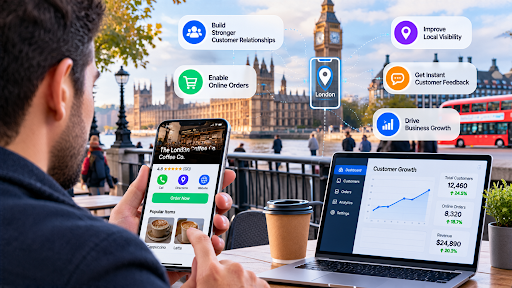
Walk down any high street in London and the competition for a customer’s attention isn’t really happening on the street at all it’s happening on their phone, between a dozen other apps all fighting for the same few minutes of daily attention. A capable Mobile app development Company in London understands that local businesses aren’t just competing with the shop next door anymore. They’re competing with whatever app a customer opened last, and the bar for earning that attention keeps climbing.
London’s business landscape is dense, varied, and genuinely competitive in a way that makes generic marketing advice fall flat. A café in Shoreditch and a boutique in Mayfair aren’t solving the same problem, but both are discovering that a well-built app does something email and social media alone never could it puts the business directly on a customer’s home screen, available the moment they think to check it.
Local Discovery Got Dramatically More Precise
Finding a nearby business used to mean a generic search or, more often, just walking past it. Mobile apps using location data now surface relevant businesses based on genuine proximity and real-time context a coffee shop two minutes away showing up right when someone’s actually looking for one, rather than buried in a long list of results sorted by nothing in particular.
This matters enormously in a city as dense as London, where there might be six cafés within a five-minute walk of any given office. Apps that use geolocation well don’t just list those options. They surface the most relevant one at the right moment, which is a meaningfully different and more useful kind of discovery.
Click-and-Collect Reshaped How Londoners Shop
London’s combination of long commutes and limited free time made click-and-collect genuinely popular, not as a passing trend but as a real behavior change. Customers browse and order through an app, then pick up in person, skipping a browsing trip entirely while still getting the product the same day. Retailers offering this well have seen it become one of the most consistently used features across their entire app, not a niche option a small segment of customers happens to prefer.
This matters specifically in London’s transit-heavy culture. Ordering ahead to collect on the way home from a Tube stop solves a very real problem limited time, a commute that doesn’t leave room for browsing, and a genuine desire to avoid standing in a queue after a long day.
Loyalty Programs Earned Genuine Daily Relevance
London has no shortage of competing businesses in nearly every category, and a loyalty program that only matters once a month doesn’t do much to keep a customer coming back. App-based loyalty programs changed this by offering dynamic, ongoing value tiered rewards, surprise perks, personalized offers based on actual buying patterns rather than a single stamp card reward that only becomes relevant after ten separate visits.
This kind of ongoing engagement matters because London customers have genuine alternatives on nearly every block. A loyalty program that feels worth checking regularly gives a business a real reason to stay top of mind instead of getting lost among several nearly identical options nearby.
Local Events and Community Features Built Real Connection
Independent London businesses, especially in neighbourhoods with strong local identity, have used apps to build community around events, workshops, and local happenings rather than purely transactional interactions. A bookshop hosting a reading, a brewery announcing a tap takeover, a boutique running a styling session apps let these businesses communicate this directly to an engaged local audience without relying entirely on social media algorithms that may or may not actually show the post to interested followers.
This matters because algorithm-dependent platforms are unreliable for reaching an audience consistently. An app notification reaches a customer directly, without a platform deciding whether that customer’s feed happens to show it that day.
Multi-Language Support Reflected London’s Genuine Diversity
London is one of the most linguistically diverse cities in the world, and businesses serving that diversity well have started building multi-language support directly into their apps rather than assuming English is the only language customers actually prefer to interact in. This isn’t a minor accessibility feature in a city like London it genuinely widens who feels comfortable actually using a business’s app in the first place.
Weather-Responsive Marketing Took Advantage of a Very London Reality
London’s weather is famously unpredictable, and some businesses have started building weather-responsive features directly into their apps a coffee shop pushing a hot drink promotion on a sudden cold snap, an umbrella retailer sending a relevant notification right as rain starts. This kind of contextual timing performs noticeably better than generic, untimed promotions, because it reaches someone at the exact moment an offer actually feels relevant to their immediate situation.
Budget Planning Shapes What’s Actually Realistic
Any London business considering this kind of investment eventually runs into the same practical question around Mobile App Development Cost, which varies significantly based on features a simple loyalty and ordering app sits at a very different price point than one incorporating AR try-on, AI-driven personalization, and deep POS integration, and understanding that range upfront helps a business scope a realistic first version instead of overbuilding before knowing what customers actually use.
Transport Integration Solved a Very Local Problem
Few cities depend on public transport as heavily as London, and some business apps now integrate transit data directly showing estimated travel time to a location, or timing a notification based on when someone’s likely nearing a stop close to the business. This kind of integration feels almost unnecessary in a car-dependent city, but it’s genuinely useful in London specifically, where a huge share of customers are making decisions based on Tube and bus timing rather than driving directions.
Why This Actually Matters for London Businesses Specifically
London isn’t a generic market, and treating it like one misses what actually makes mobile engagement work here density, diversity, transit-dependent routines, and genuine neighbourhood identity that varies block to block. Businesses building apps with these specifics in mind, rather than a generic template applied everywhere, are the ones actually succeeding at turning foot traffic and passive awareness into a real, ongoing relationship with their customers.
Where This Is Headed
The London businesses pulling ahead aren’t necessarily spending the most on technology. They’re the ones building for how Londoners actually move through their day rushed, transit-dependent, surrounded by genuine alternatives on every corner. An app that respects that reality, rather than copying a generic playbook built for a different kind of city, is what actually earns a place on a customer’s home screen instead of getting deleted after one disappointing use.





Post Comment